Overview
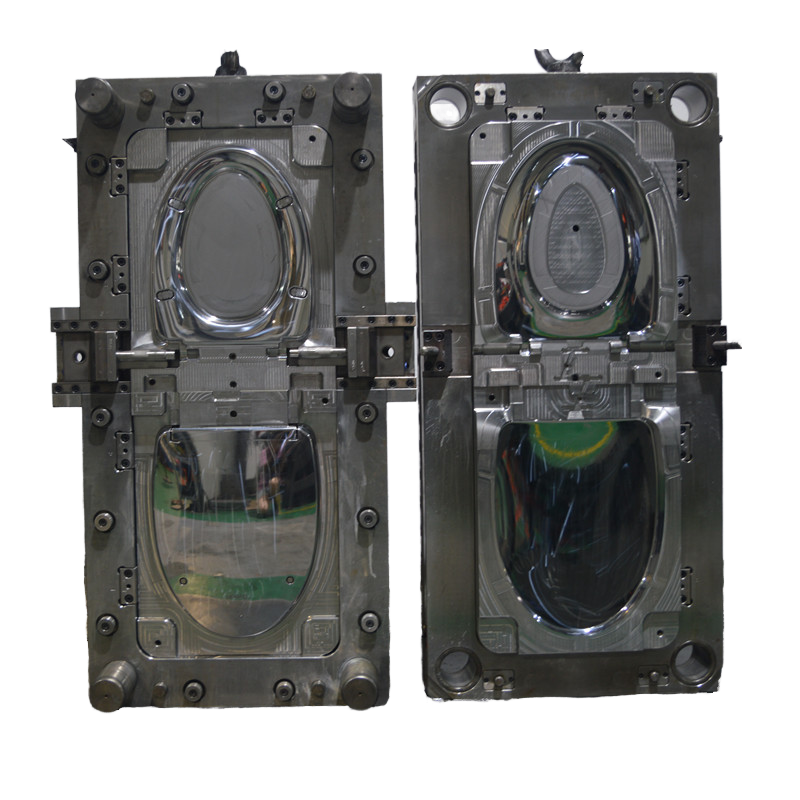
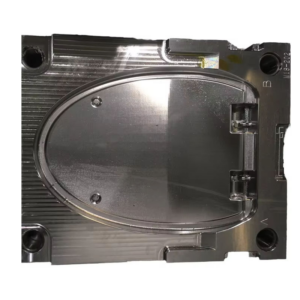
The OEM Durable Household Injection Mold Tooling for Toilet Lid Covers is engineered to produce robust, cosmetically consistent toilet seat and lid assemblies for residential and commercial sanitary ware. Designed for long production runs and superior part integrity, our tooling supports thin-to-medium wall designs, integrated hinge features, overmolding for soft-touch surfaces, and insert molding for metal bushings or threaded fasteners. Built with heavy-duty steels and precision machining, these molds deliver tight dimensional control, repeatable surface finishes, and reliable cycle life required by sanitary-product OEMs and distributors.
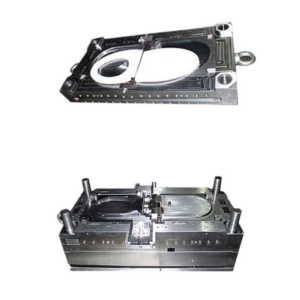
Basic Information
| Specification | Details |
|---|---|
| Mold Material | H13, S136, 718, SKD61 (hardened steel for production); Aluminum 7075 for prototype tooling |
| Core Processes | 5-axis CNC machining, high-speed milling, mirror EDM, wire EDM (WEDM), precision surface grinding, laser texturing |
| Molding Types | Single- to multi-cavity (1–4 cavities typical for large parts), hot-runner systems, valve-gated runners, family molds, 2K/overmold, insert molding |
| Compatible Materials | PP (homopolymer & copolymer), ABS, PC/ABS blends, SAN, PMMA (for translucent trims), TPE for soft-touch overmolds |
| Surface Finish (part) | High-gloss mirror polish, satin/matte, anti-fingerprint texture, micro-textures per SPI standards |
| Tolerance | ±0.02 mm typical; ±0.01 mm available for critical sealing/hinge features |
| Part Size Range | Up to full toilet lid dimensions (single-part cavities sized for 350–500 mm wide lids) |
| Wall Thickness | Typical 1.2 – 3.0 mm (design dependent; ribbing for stiffness) |
| Lead Time | Prototype tooling: 12–20 days; Production tooling: 4–10 weeks (complexity dependent) |
| Expected Tool Life | 250k–2M+ shots (depending on steel grade, coatings and maintenance) |
| Cooling & Cycle | Conformal / optimized cooling channels for balanced shrinkage and shortened cycle times |
| Certifications | ISO 9001:2015; ISO 14001 available; RoHS / REACH support for material compliance |
| OEM Services | DFM, moldflow simulation, rapid prototyping, trial shots, FAI / PPAP documentation, assembly & packaging |
| Place of Origin | Xiamen, China |
Key Advantages
- Large-Part Precision — heavy-duty cavity construction and precision machining ensure flatness, consistent gap control, and reliable mating with toilet bowls and hinges.
- Integrated Hinge & Insert Solutions — tooling supports captive metal bushings, threaded insert overmolding, snap-hinge features, and multi-shot overmolding for soft-close and soft-touch options.
- Cosmetic Control — mirror-polished faces and controlled micro-textures for durable gloss or matte finishes that accept plating, painting, and pad printing.
- Optimized Thermal Management — conformal and segmented cooling reduces cycle variation and warpage on large panels, improving first-pass yield.
- Durability for High-Volume Runs — hardened steel grades, PVD/nitriding options and optimized runner systems for long tool life and minimal maintenance.
- Design-for-Manufacture (DFM) Support — moldflow analysis to control weld lines, sink, and shrinkage; ribbing and gusset strategy to maximize stiffness while minimizing material.
- Assembly-Ready Parts — tooling includes features for low-force demolding and automated robotic handling to integrate hinges, seals or packaging inline.
Surface Treatment & Decoration Options
- Mirror Polish (SPI A1) — premium glossy covers suitable for plated trim or high-end bathroom suites.
- Soft-Touch / Satin Textures — matte finishes that reduce fingerprints and improve tactile perception.
- Laser Texturing — repeatable micro-textures for anti-slip and decorative effects.
- Pad / Screen Printing & Laser Marking — durable logos, brand marks, and measurement indicators.
- Vacuum Metallization / Electroplating-Ready Surfaces — tooling prepared to produce parts for secondary metallization or chrome-look finishes.
- UV/Hard Coatings & Anti-Stain Treatments — enhanced scratch resistance and easier cleaning in bathroom environments.
Quality Assurance
All molds and production parts are controlled under our ISO 9001 quality-management processes. We perform DFM and moldflow simulation before machining to mitigate warpage and sink risk. Machined cavities and cores are inspected with ZEISS CMM and 3D optical scanners; surface roughness is measured with profilometers. Molds undergo trial runs and First Article Inspection (FAI) with dimensional reports, flatness and gap checks, cosmetic inspection, and functional hinge/seal validation. Production validation includes run-life sampling, SPC monitoring, drop and impact testing, hinge fatigue and torque testing, UV/chemical resistance checks (resistance to household cleaners), and packaging validation. Material certificates, process records, and traceability documentation are provided with shipments.
Our Factory
Our tooling facility combines industrial-scale machining capacity with precision finishing and molding expertise. Key assets include 5-axis CNC machining centers sized for large cavity plates, high-speed mills, mirror EDM and slow wire-cut machines for complex undercuts and slide features, precision grinding, and laser texturing systems. Tool steel hardening, PVD coatings and nitriding are performed with close process control to extend tool life. We operate large-tonnage injection presses (for parts up to full seat/lid assemblies), hot-runner valve gating systems, 2K molding lines for hard/soft combinations, and robotic handling for safe demolding and automated assembly. In-house secondary services include painting, vacuum metallization, pad printing, ultrasonic welding (for insert retention), and final assembly lines for hinge installation and packaging. A dedicated testing lab performs impact/drop tests, hinge-cycle endurance, chemical exposure, and dimensional stability testing—ensuring each tool and production run meets customer performance and cosmetic expectations.