At Toolingsun, a high-quality manufacturer and full one-stop service partner, we advise design teams and OEMs on alloy selection, process choices, and DFM so cast parts meet mechanical and production goals. Strength in die-cast parts isn’t a single number — it’s the outcome of alloy chemistry, casting process, tooling design, and downstream processing. This article breaks down the controlling factors, compares primary die-casting alloys, and explains practical manufacturing steps that improve strength and performance.
Overview and definition of die cast metals
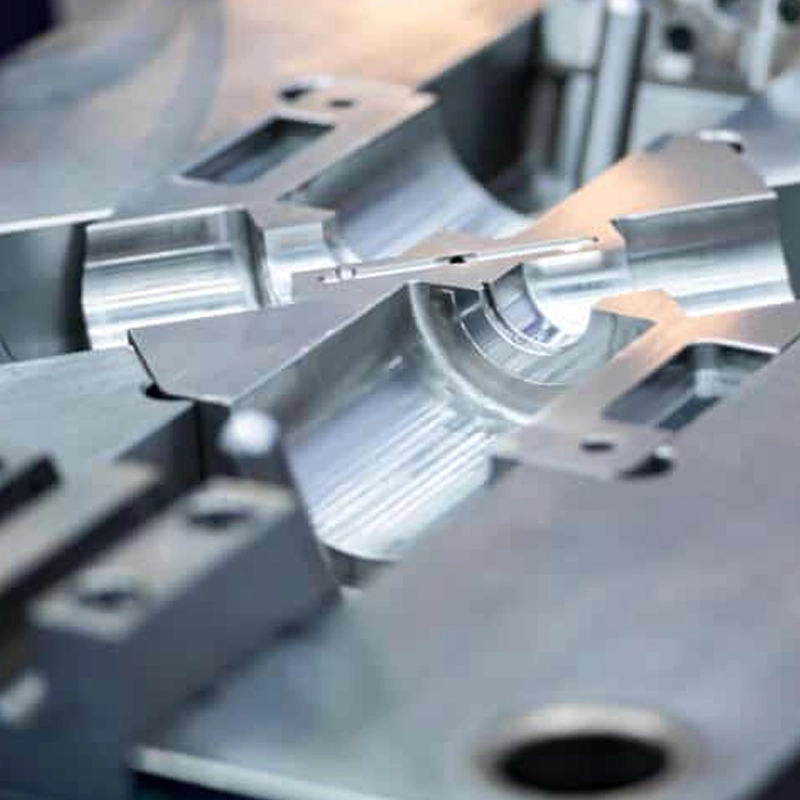
Die casting is a high-pressure metal-forming process where molten alloy is injected into a steel die (tool) to produce near-net shapes with excellent dimensional accuracy. Typical die-casting families include aluminum (Al), magnesium (Mg), and zinc (Zn) alloys. The process creates parts with fine surface finish and thin walls but introduces microstructural features (solidification structure, porosity) that influence mechanical strength.
Determining the strength of die cast metals
A. The specific alloy composition
Alloying elements and their concentrations determine base mechanical properties:
- Aluminum-silicon (Al-Si) alloys (e.g., A380, ADC12) are common for their fluidity, corrosion resistance, and a good strength-to-weight ratio. Silicon improves castability; Mg and Cu additions can raise strength after heat treatment (e.g., Al-Si-Mg alloys that can be age-hardened to T6).
- Magnesium alloys (e.g., AZ91, AM60) are the lightest structural die-casting alloys. Mg offers excellent specific strength but is more sensitive to corrosion and requires protective finishes.
- Zinc alloys (e.g., Zamak family) exhibit very high ductility and excellent castability for intricate, thin, small components; zinc’s tensile strength is typically lower than heat-treated aluminum but its die-casting advantage is excellent dimensional resolution and surface finish.
Alloy microstructure — grain size, eutectic morphology, and intermetallic phases — governs yield strength, elongation, and fatigue performance.
B. Structural integrity and porosity
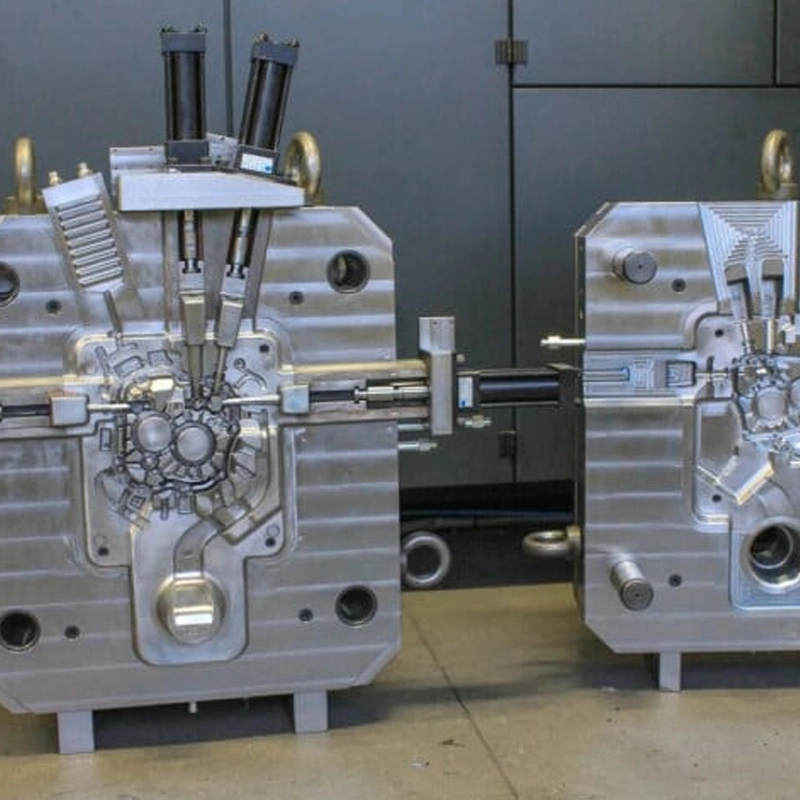
Porosity is the primary enemy of die-cast strength. Gas entrapment, shrinkage cavities, and entrained oxides reduce effective load-bearing area and initiate cracks.
- Process controls to reduce porosity: vacuum-assisted die casting, optimized shot profiles, controlled metal temperature, and improved gating/venting reduce trapped air and shrinkage.
- Solidification control: conformal cooling, chills, and strategic runner design guide solidification away from critical sections to minimize shrink cavities.
- Post-processing: heat treatment (solution + aging for Al alloys), Hot Isostatic Pressing (HIP) for critical castings, and local machining to remove defects can dramatically improve mechanical properties.
- Surface and subsurface integrity: porosity close to the surface can be sealed by impregnation, plating, or coatings to enhance corrosion and fatigue behavior.
Primary die cast metal alloys and their advantages
Aluminum (Al) die casting advantages
- High specific strength: ideal where weight reduction matters (automotive, e-mobility housings).
- Thermal stability: suitable for engine, transmission, and heat-dissipating components.
- Heat treatable: Al-Si-Mg families can be T6-aged for significant strength gains.
- Good corrosion resistance with proper coatings or anodizing.
Processes and improvements: HPDC (high-pressure die casting) with vacuum assistance, T6 aging, CNC machining of critical features, and anodize/powder coating for surface durability.
Magnesium (Mg) die casting advantages
- Best strength-to-weight ratio among die-cast metals.
- Excellent vibration damping and EMI shielding when appropriately alloyed and plated.
- Fast solidification and high productivity.
Considerations: requires corrosion protection, and DFM must account for lower melting point and different shrinkage. Protective coatings and controlled atmosphere casting reduce defects.
Zinc (Zn) die casting advantages
- Exceptional castability and thin-wall capability, enabling complex, highly detailed parts.
- High ductility and impact resistance at room temperature.
- Low tooling cost and fast cycle times make Zn ideal for small, precision components.
Use cases: precision connectors, gears, decorative hardware, small housings.
Manufacturing practices that raise strength and reliability
- DFM for casting: fillet radii, uniform wall sections, and balanced ribs reduce stress concentrators. Early DFM input from your die-casting supplier shortens iteration cycles.
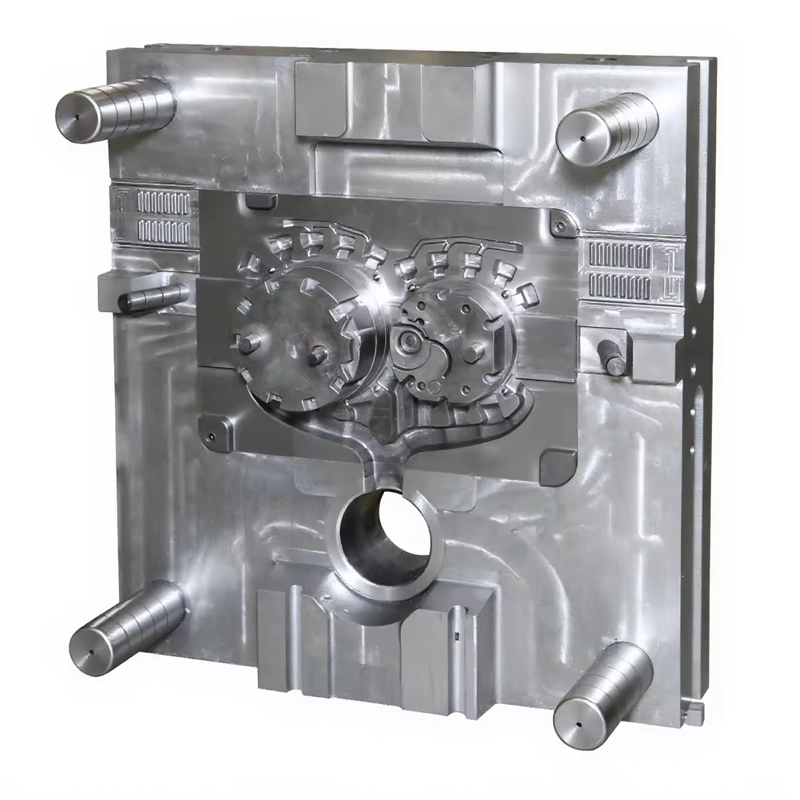
- Tooling quality: tight die tolerances, polished cavities, and conformal cooling reduce hot spots and porosity. Tool maintenance preserves part consistency.
- Process optimization: controlled shot curves, vacuum or low-pressure fill, and temperature control minimize turbulence and entrained gases.
- Post-casting treatments: solution heat treat + aging (Al), machining critical bores, shot peening to induce compressive surface residual stress, and selective HIP for critical aerospace parts.
- Surface finishing: electroless nickel, anodizing, powder coat, or plating provide corrosion protection and can mask minor surface porosity.
Conclusion
Strength in die-cast components is a systems outcome: alloy chemistry sets potential, but process discipline, tooling, DFM, and post-processing determine realized performance. For lightweight structural parts, heat-treatable aluminum alloys provide an excellent balance of strength, thermal performance, and cost. Magnesium offers unmatched specific strength where corrosion control is manageable; zinc gives superior detail and manufacturability for small complex parts.
At Toolingsun, we combine alloy expertise, precision tooling, HPDC/Cold-Chamber processes, CNC finishing, and OEM service to deliver high-quality die-cast parts. Our DFM reviews, vacuum/HPDC capabilities, and post-cast heat-treat and finishing lines help customers meet performance targets reliably.
Want to optimize an enclosure, structural housing, or precision die-cast part? Contact Toolingsun for a DFM consultation, prototype tooling quote, or material-performance comparison. Tell us your load cases, target volumes, and finish requirements — we’ll recommend alloys, process flows, and treatments to meet your application goals.
FAQs
1. How does the “strength-to-weight ratio” of aluminum and magnesium compare to steel?
Al and Mg have lower absolute strength than many steels but much lower density; on a strength-to-weight basis (specific strength), Al and Mg can outperform steels for lightweight structural parts, especially when combined with smart geometry.
2. Why is zinc casting preferred for very complex, small components despite aluminum’s popularity?
Zinc’s superior fluidity, low melting point, and tight dimensional control let manufacturers produce intricate thin-wall features and fine threads with lower tooling cost and faster cycles.
3. Does the high pressure in die casting make the metal stronger than if it were cast by gravity?
High pressure reduces porosity and improves die fill, producing finer microstructure and better surface integrity than gravity casting; however, strength gains are alloy- and process-dependent and often reinforced by post-treatments.
4. Why is die-cast aluminum used for high-temperature applications like engine parts?
Certain Al alloys retain strength at elevated temperatures, and aluminum’s thermal conductivity helps dissipate heat. Proper alloy selection and heat treatment enable performance in elevated-temperature contexts.
5. What is the main trade-off when choosing magnesium over aluminum?
Magnesium offers lighter weight but requires more aggressive corrosion protection and careful DFM to account for different shrinkage and joining techniques.
6. Why are iron and steel rarely used in die casting?
Steel/iron have much higher melting points and are unsuitable for conventional high-pressure die casting; other casting methods (sand, investment, or die forging) are used instead.
7. What specific property makes die-cast alloys ideal for electronic enclosures?
Good combination of dimensional accuracy, thermal conductivity (for heat dissipation), and EMC shielding (when plated) — plus the ability to mold complex mounting bosses and ribs into a single part.