Industry Background: More Production Tooling Is Specified Across Borders
Grand View Research values the global injection molding market at USD 312.7 billion in 2025 and projects USD 462.5 billion by 2033, a 5.1% CAGR from 2026. Asia Pacific held 41.2% of 2025 revenue, and China was the largest national market, according to Grand View Research.
A Market Anchored in Asia Pacific
For sourcing teams outside the region, this often means a tool is specified in one country, built in a second and run in a third. Steel grade is the part of the specification that has to survive that journey. It is written on a drawing and certified by a mill, and it cannot be inspected again once the mold is assembled.
Why Steel Specification Is Moving Upstream
A September 2026 Plastics Today feature quotes MISUMI Americas’ injection molding director on how tooling risk is now handled. Problems used to surface in the tool room or at T1. The real capability today is catching them before steel is ordered, through DFM review, mold flow simulation and structured risk assessment. He adds that tooling suppliers are asked to absorb supply chain risk, including resin availability and lead times on specialty steels, not only design risk.
Why It Matters: Steel Is a Small Line Item With a Large Risk Profile
Overbuying and Underbuying Both Cost Money
The same Plastics Today source describes the most common mistake as choosing steel for the wrong volume. Overbuying spends weeks and thousands of dollars on durability the program never uses. Underbuying produces flash, wear and repairs at the moment production ramps.
The Hidden Cost: Flash, Wear and Mid-Program Repair
Plastics Engineering, the SPE publication, notes that flash along the parting line can damage a mold over time. It also notes that dust, dirt and corrosive exposure shorten mold life. At part level, the same defects turn into trimming, sorting and rejects that never appeared in the tooling quotation.
Launch Timing and Tool Downtime
A tool that goes down for repair during a demand peak costs more than the repair itself. Premium steel only pays off if it keeps the tool running through the volume curve the program actually follows.
Market Observation: What Published Sources Say About Steel and Mold Life
SPI Mold Classes Give Buyers a Common Language
Plastics Engineering (October 2024) lists the five SPI mold classes:
- Class 101 is for over 1,000,000 cycles.
- Class 102 is for up to 1,000,000.
- Class 103 is for up to 500,000.
- Class 104 is for up to 100,000.
- Class 105 is for around 500, for prototypes.
These are upper ranges, and the same article stresses that material, operating environment, cycle time and maintenance all move real-world life.
Resin Drives the Steel Choice
According to Plastics Today, resin shapes steel selection more than any other line on the specification sheet. The article’s guiding questions are which resin runs through the tool, how many shots it must survive, and what the part surface must look like. Each steel family below follows from those answers.
P20 and 718: Moderate Volumes and Friendly Resins
Plastics Today describes these pre-hardened steels as the workhorses for moderate volumes of resins such as PP or ABS. They machine quickly, need no heat treatment, and keep tooling cost and lead time down.
H13 and Other Hardened Steels: Filled and High-Temperature Resins
For glass-filled nylon or PBT, the same source warns that a P20 cavity can wear out before the program ends. H13 also handles high-temperature engineering resins without heat-checking. Hardened grades usually bring heat treatment into the build schedule, so ask how it is planned and what finish machining follows.
S136 and 420 Stainless: Corrosive Resins and Mirror Polish
Plastics Today positions these grades for corrosive resins such as PVC, POM and flame-retardant compounds. S136 also polishes well, which is why it appears in optical and medical tooling. For regulated programs, see Toolingsun’s medical mold work.
NAK80: Cosmetic Surfaces Where Polishing Hours Matter
For high-gloss or cosmetic parts, the source says NAK80 earns back its cost in polishing hours saved. Surface targets should be agreed early, so review the available surface finish options before the steel is fixed.
Aluminum: Prototypes and Bridge Tooling
Plastics Engineering notes that aluminum is cheaper and faster to machine but has a shorter life and wears more easily. Plastics Today adds that aluminum suits prototypes, bridge tooling and low volumes, and that its thermal conductivity can shorten cycles.
Recycled and Filled Resins Raise the Bar
Plastics Today reports that post-consumer resin is harder on tooling than virgin resin, more abrasive and less consistent. This pushes programs toward harder steels and surface engineering such as DLC and PVD coatings earlier than volume alone would justify. It also describes a case where a resin grade change altered shrinkage and forced re-machining of core and cavity inserts.
Life Is Not Set by Steel Alone
Plastics Engineering lists operating environment, cycle time and cooling, and preventive maintenance as life factors. Its design recommendations include even heat distribution, adequate venting and cooling, and PVD surface treatments to reduce friction and wear.
Toolingsun Perspective
During production mold quotation and engineering review, our team has observed that more buyers are moving steel selection discussions earlier in the tooling process. Instead of asking only for the mold price and delivery time, purchasing teams are increasingly requesting information about recommended steel grades, expected tool life, resin compatibility and maintenance considerations before approving tooling investment.
In many export tooling projects, the initial CAD design does not always contain enough information to determine the optimal steel solution. Our engineers typically review the expected production volume, plastic material, filler content, surface finish requirements and part complexity before recommending a tooling structure. For example, a mold designed for standard ABS production may require a different steel approach when the same component changes to glass-filled materials, higher-temperature engineering plastics or higher cosmetic surface requirements.
We also see that lifecycle considerations are becoming more important for global customers. Buyers are not only comparing the initial mold quotation; they are evaluating whether the tooling can maintain stable production, reduce unexpected maintenance and support future demand changes. By reviewing steel selection together with DFM analysis, mold flow considerations and production requirements before machining begins, we help customers make tooling decisions based on long-term manufacturing performance rather than initial cost alone.
Practical Decision Framework: Seven Checks Before a Steel Grade Is Released
Use these as the agenda for your next supplier call.
1. State the Resin, Fillers and Likely Alternates
Give the supplier the exact resin, filler content and any alternate grades you may approve later. Toolingsun’s materials reference covers glass-filled nylon, PC, POM and PEEK, the families where steel choice matters most.
2. Convert Program Volume Into Shots per Tool
Tooling cost per part is the tool price plus planned maintenance plus the cost of expected repair downtime, divided by shots needed times cavities. The numbers below are hypothetical and for illustration only. Tool A costs USD 40,000 and is rated for 400,000 shots. Tool B costs USD 55,000 and is rated for 1,000,000 shots.
- At full rated life, tooling cost per shot is USD 0.100 for Tool A and USD 0.055 for Tool B.
- If the program only ever needs 400,000 shots, Tool B’s cost per shot over the program is USD 0.1375.
The cheaper steel is not always cheaper, and the premium steel is not always the better value.
3. Map Surface Requirements Zone by Zone
Mark which surfaces need mirror polish, which need texture, and which are hidden. This tells the supplier where polishability matters and where it does not.
4. Decide Where Premium Steel Is Actually Needed
Ask whether premium steel or coatings can be limited to wear-critical areas such as gates, cores and cavity inserts. Replaceable inserts also let a worn area be swapped without rebuilding the whole tool.
5. Ask for Steel Type and Hardness of Every Critical Component
Request a component list with steel grade, hardness after heat treatment, and mill certificates. A supplier who cannot provide it cannot prove what is inside the mold.
6. Lock the Steel Grade After DFM and Mold Flow, Not Before
Plastics Today links cost overruns to committing steel before part geometry and gate design are settled. A grade that fits a draft design may become inadequate once wall thickness or rib placement shifts.
7. Plan Maintenance, Spare Inserts and Repair Terms Up Front
Agree on cleaning intervals, wear-part spares and who pays for repair before the mold ships. Toolingsun’s project management page describes the single point of contact buyers should expect for these conversations.
How Toolingsun Approaches Steel Selection on Production and Export Molds
If your team is sourcing a production tool, Toolingsun’s production molds and export injection molds and tooling services are built around the checks above. The points below come from the company’s published pages. Life figures are company statements and depend on resin, steel, maintenance and operating conditions.
Grades Matched to Run Size, Resin and Finish
Toolingsun’s production molds page lists P20, S136, NAK80, H13, 718, 2738 and 2316. It says selection weighs production run size, part complexity, finish quality and the resin, including corrosive resins and glass-filled abrasives. The company prioritizes S136, S136H and NAK80 for extended tool life and low maintenance on high-volume, complex parts. The shop lists 9 CNC machines (two of them high-speed), 4 Makino sinker EDM, 5 Sodick wire EDM and 5 precision grinders.
Mold Flow and DFM Before Steel Is Cut
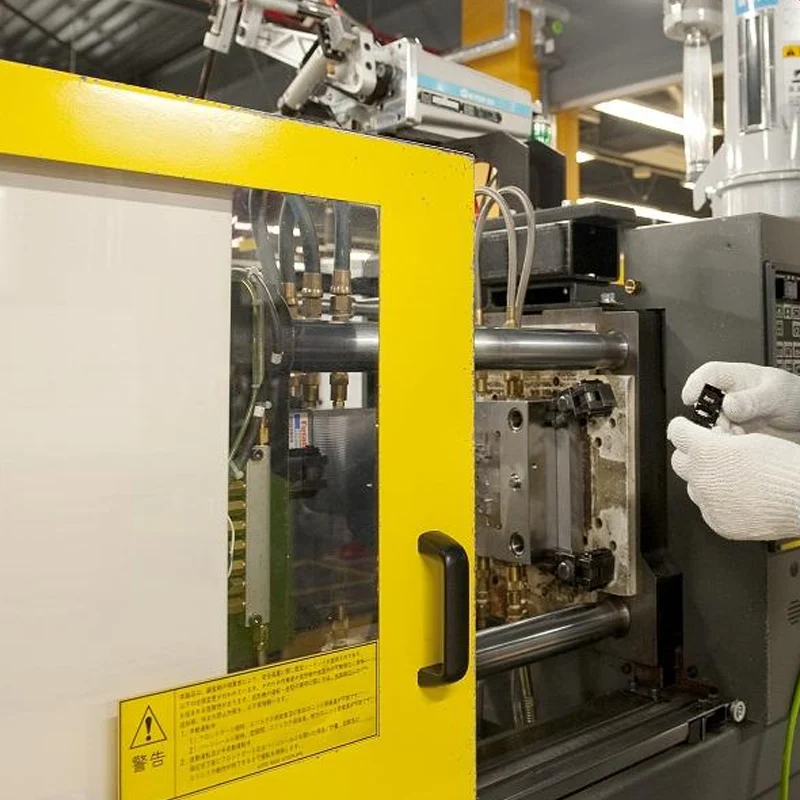
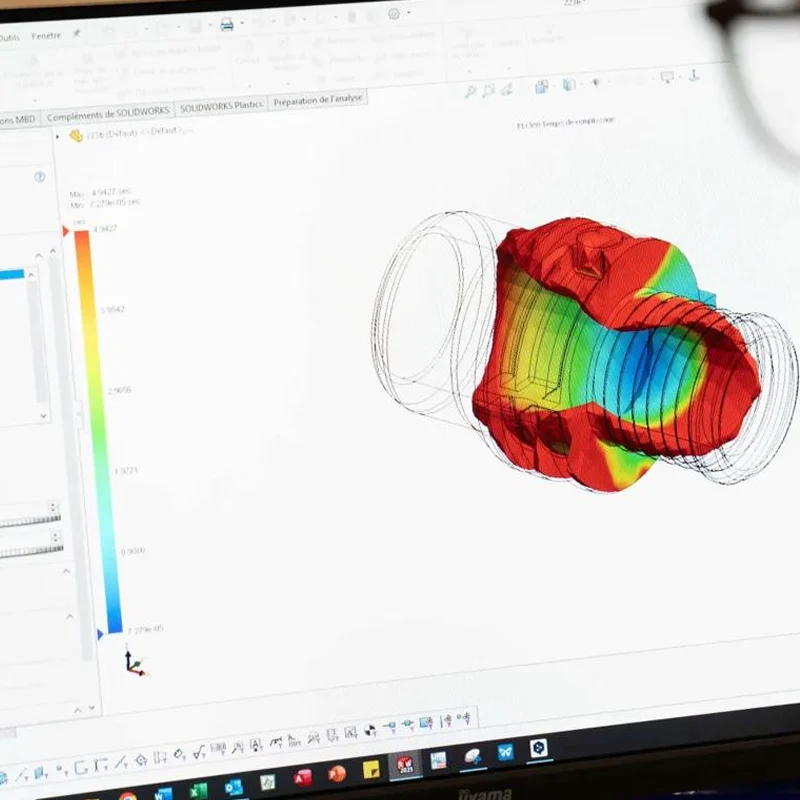
Toolingsun states that mold flow analysis, covering air traps, hot spots and weld lines, is offered free with injection mold tooling orders. DFM feedback is provided alongside quotations.
Design Approval, Sampling and Pilot Runs Before Shipment
On export orders, Toolingsun prepares a 3D tool design, reviews it internally and sends it to you for approval before building begins. Sample testing and pilot production follow before delivery. The company gives a first-tool lead time of 4–8 weeks depending on complexity, and it handles most post-sampling adjustments in-house.
Support Over the Life of the Tool
Toolingsun states its molds are built for up to one million shots, with precision aimed at preventing flash. A dedicated English-speaking project manager handles communication across time zones. While Toolingsun produces your parts, it states that repair, refurbishment or replacement of the mold is at its own expense.
Documentation and Industry Fit
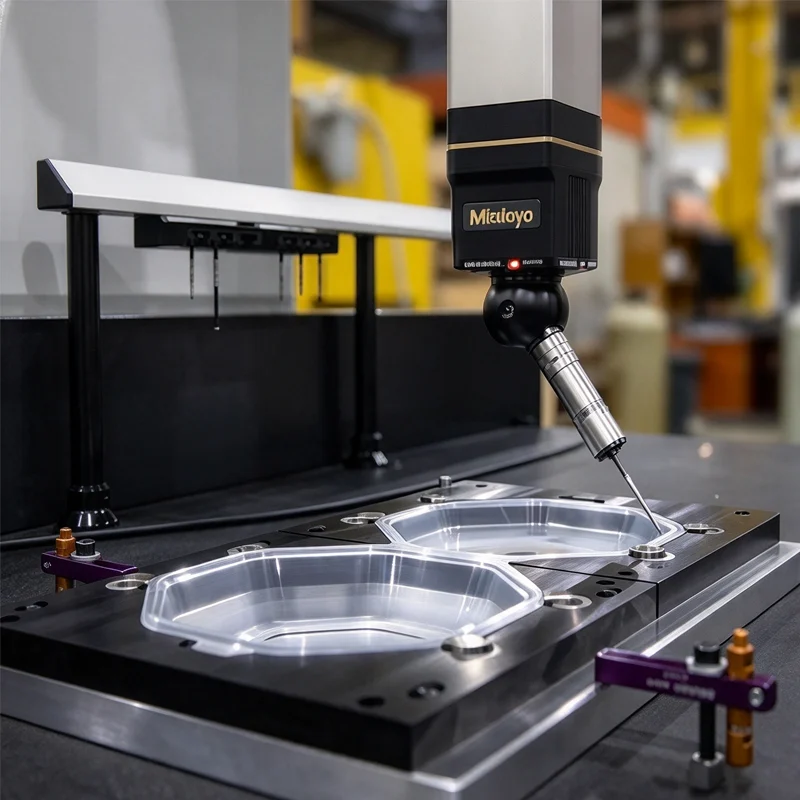
The company holds ISO 9001:2015 and IATF 16949 certifications. It lists material traceability, TDS and reports such as FAI, PPAP, CMM inspection and SPC, with a Hexagon 3D tester on its equipment list. For multi-material programs, see its overmolding mold capability. For the full capability list, see why buyers choose Toolingsun molds.
What This Means for Your Brand
From Steel Grade to Supplier Selection
Steel is the first place where a supplier’s engineering judgment becomes visible. If a supplier can explain why a grade fits your resin, volume and surface, the same discipline usually shows up in DFM, trials and maintenance planning.
The Commercial Implication
Treat steel as an input to a cost-per-part model, not a purchase-order line. Document steel grades, hardness and heat treatment in your tooling agreement so the mold can be transferred or second-sourced later. As recycled content rises in your resin strategy, expect wear-related spec questions earlier in each program.
Conclusion
Steel selection balances cost and mold lifetime only when the resin, shot count and surface requirements are fixed first. Use SPI classes as a vocabulary, confirm steel with documents, and test the proposal with a cost-per-shot calculation before you approve the tool.
FAQ
1. Can one mold use different steels in different areas?
Yes. Wear-critical features such as gates, cores and cavity inserts can use harder or coated steel while the rest of the tool uses a more economical grade. Plastics Today also describes hybrid tools that pair conventional steel bases with printed inserts. Ask the supplier to list steel per component.
2. Do coatings replace hardened steel?
No. PVD and DLC coatings reduce friction and wear, but they work on top of a suitable base steel. Ask when and how a worn coating can be reapplied.
3. What documents prove which steel is in the mold?
Request mill certificates, hardness records after heat treatment and a steel-by-component list. Toolingsun lists material traceability and TDS reports among its quality documents.
4. What happens if we change resin grade after the tool is built?
Shrinkage differences can shift part dimensions. In the Plastics Today case, MISUMI re-machined core and cavity inserts instead of rebuilding the mold. Tell your supplier about any alternate resins before steel is cut.
5. How does steel choice affect lead time?
Pre-hardened grades keep lead time down, according to Plastics Today, and specialty steels can lengthen it. Toolingsun gives 4–8 weeks for a first tool, depending on complexity. Ask your supplier to confirm steel availability when quoting.
About the Author
Jonny is a Senior Tooling Engineer at Toolingsun with more than 20 years of experience in injection mold design, tooling manufacturing, mold trials, and production optimization. He specializes in tool steel selection, Design for Manufacturability (DFM) review, mold flow analysis, and developing reliable tooling solutions for complex plastic components. Working closely with global brands, OEM customers, and sourcing teams, Jonny focuses on balancing mold lifetime, production requirements, material selection, and cost efficiency. His experience covers export injection molds, precision tooling development, and engineering improvements that help customers achieve stable mass production with consistent quality and long-term tooling performance.
References
- Grand View Research, Injection Molding Market Size and Share Report, 2026–2033
https://www.grandviewresearch.com/industry-analysis/injection-molding-market-report - Plastics Today, Strategic Material Selection Transforms Injection Mold Performance (September 4, 2026)
https://www.plasticstoday.com/injection-molding/strategic-material-selection-transforms-injection-mold-performance - Plastics Engineering (SPE), How to Increase Injection Mold Life (October 10, 2024)
https://www.plasticsengineering.org/2024/10/how-to-increase-injection-mold-life-006752/
Why Global Brands Choose Toolingsun for Production Tooling
✔ 20+ years of OEM/ODM experience
✔ ISO 9001:2015 and IATF 16949 certifications
✔ Steel grades from P20 to S136, NAK80 and H13 matched to run size, resin and finish
✔ Mold flow analysis included with injection mold tool orders
✔ 3D design approval before steel is cut, then sampling and pilot production
✔ FAI, PPAP, CMM and SPC reporting available
✔ Repair, refurbishment or replacement of molds at Toolingsun’s expense while it molds your parts
Send your 3D files, resin data sheet and annual volume, and Toolingsun’s engineers will review steel options before tooling starts. Contact the Toolingsun engineering team.